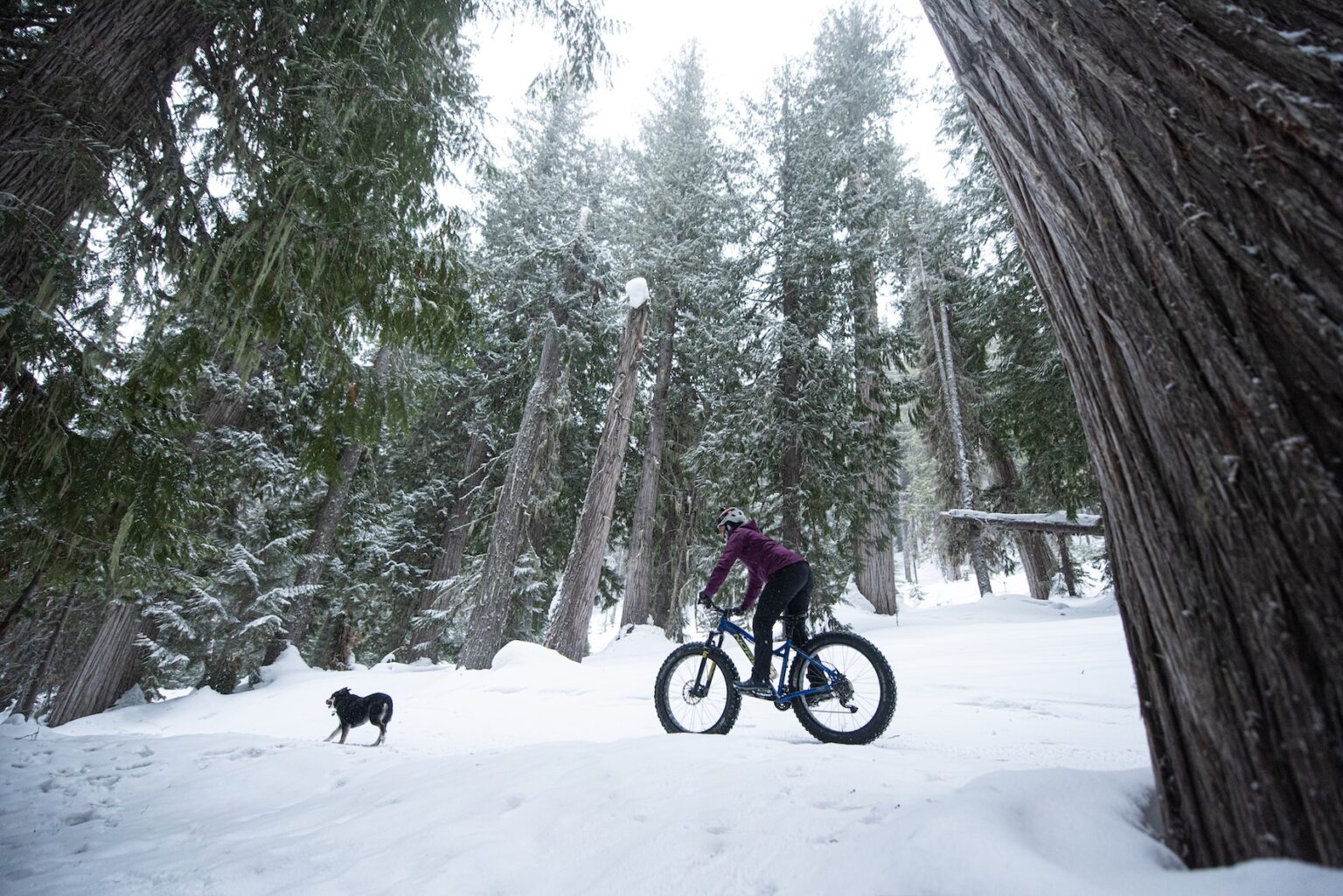
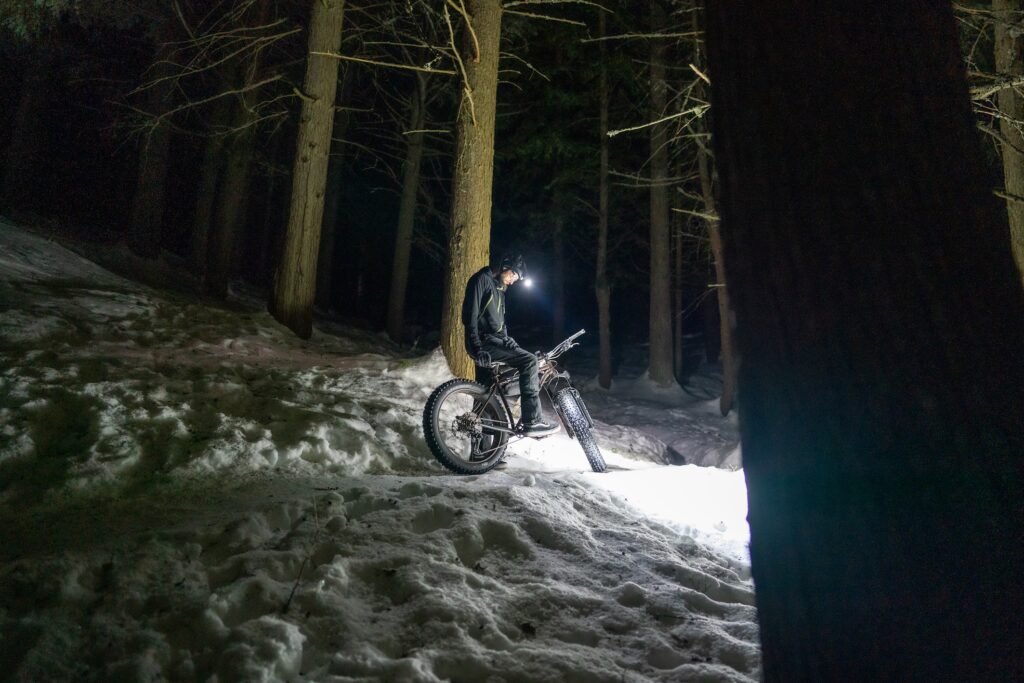
They say necessity is the mother of invention. And much as we like to go on and on about the mind-blowing powder to be had at Red Resort, there are a few days every season when conditions are not optimal for shredding. Enter: Fat Bikes. The monster truck of the biking world.
These wide-tired bikes have been on the scene commercially since 2001, but have taken off in popularity in the last decade. True fat-bike aficionados will assert that the bikes can be used year round. The stability and traction of the wider tires makes them good choices in mud, sand, and snow.
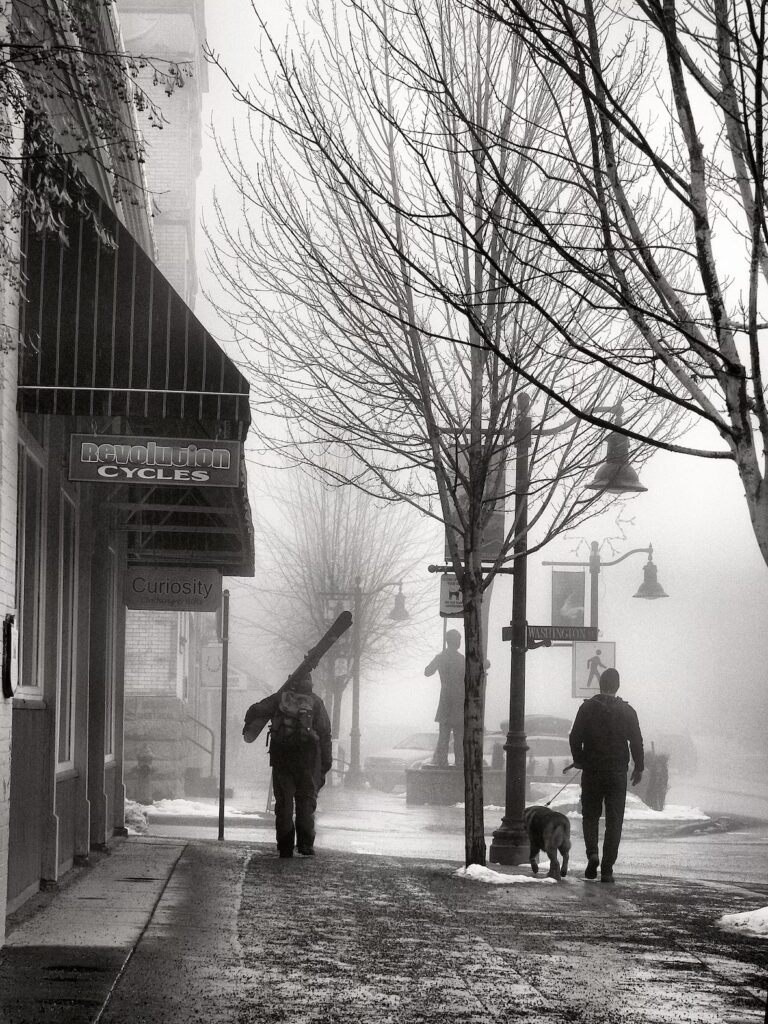
The prospect of year-round biking makes men like Rory Belter very pleased. He is a mechanic at Revolution Cycles, as well as director of The Rossland Mountain Biking Society. The group is the organizing force behind Huck ‘en Berries Bike Jam, held in September
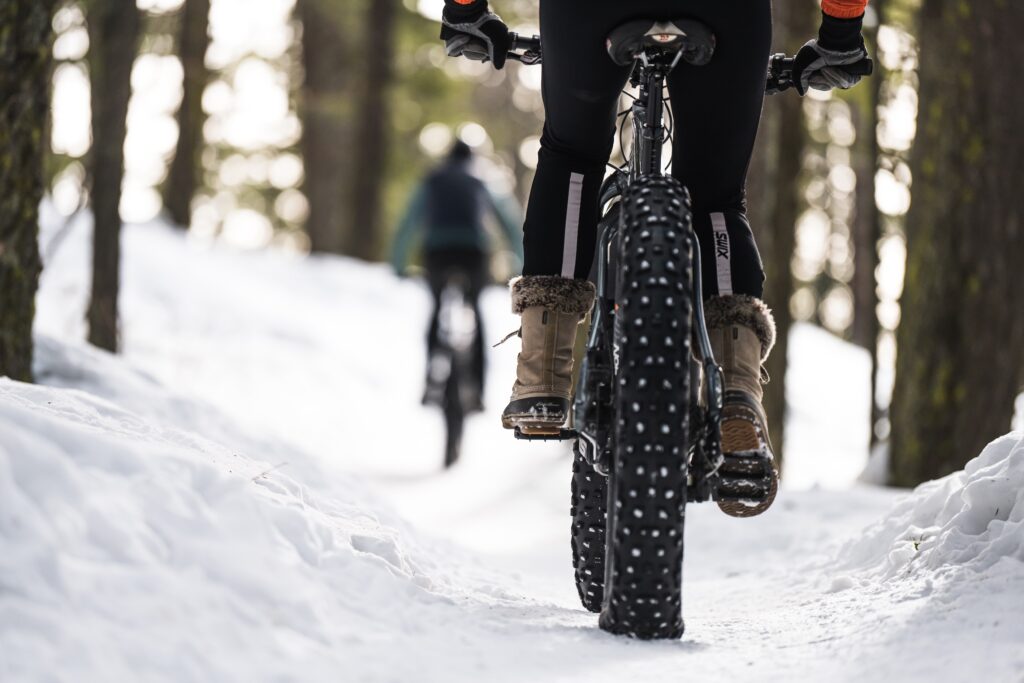
Up until 2017, Rory’s determination to do so had him packing trails by foot with snow shoes, which takes a “long-ass” time. Much to his delight, the Society acquired a groomer which he and his helpers now employ to regularly groom some 19 KM of trails radiating from Centennial Trailhead. These include Eddie J, Kootenay Columbia, Moe’s, and Blue Elephant. You can find the updated grooming report here.
As for the ideal time to go: When it’s cold and old. Firm, hard-packed snow makes for the best traction, and it’s less likely to have potholes left by walkers and runners. When temperatures are above freezing, the wheels have a tendency to slide. Slush is not your friend on a fat bike.
With so many ways to tackle the mountain this winter, getting outside in freezing temperatures has never been more appealing.
“I can’t shake that I’m a biker — it’s my identity. And to ride your bike in the winter is a novel concept”
New to fat biking?
The aforementioned potholes and slush are a good reason to consult the experts at Revolution Cycles. Here you can get a professional opinion on the conditions and rent yourself the proper equipment to tackle those conditions.